
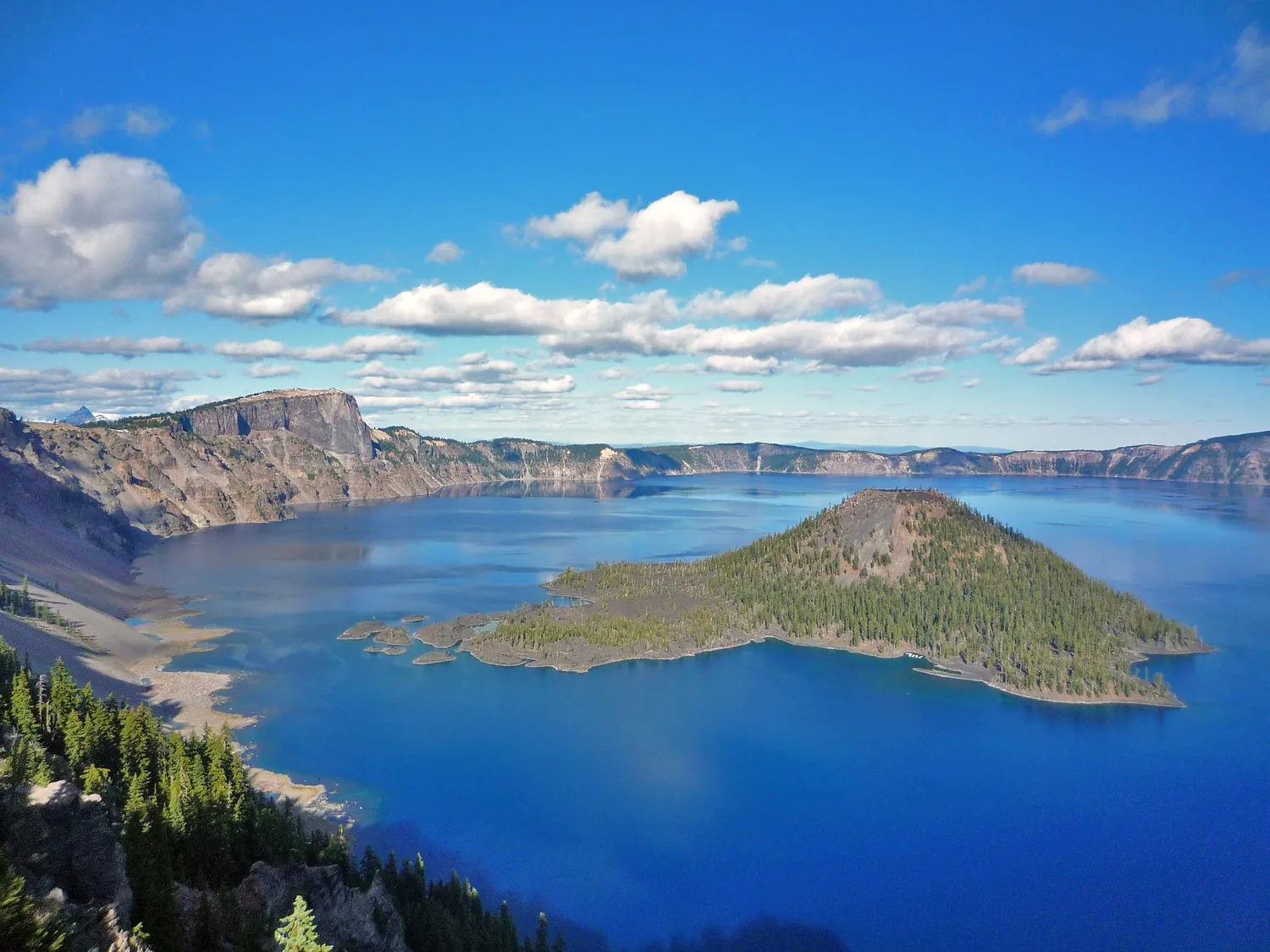
 NPS Photo
Crater Lake National Park
Tonight at Crater Lake National Park
Crater Lake inspires awe. Native Americans witnessed its formation 7,700 years ago, when a violent eruption triggered the collapse of a tall peak. Scientists marvel at its purity-fed by rain and snow, it’s the deepest lake in the USA and one of the most pristine on Earth. Artists, photographers, and sightseers gaze in wonder at its blue water and stunning setting atop the Cascade Mountain Range.
Weather & conditions
July, August, and September are your best bets for warm, dry weather. In May, June, and October, sunny days alternate with periods of rain and snow. Winters at Crater Lake are long and snowy. Storms from the Pacific Ocean dump an annual average of 41 feet (13.5 meters) of snow at park headquarters. When it's raining or snowing, the lake is usually hidden by clouds. Crater Lake is completely invisible about 50% of the time in the winter!
What this latitude gives you
From 42.9° north, anything above declination +47.1° is circumpolar here: it never sets, so it is available on every clear night of the year. Anything below declination -47.1° never clears the horizon at all.
Full astronomical darkness survives the summer here, but the window is narrow around the solstice. From late August the nights lengthen quickly.
We do not hold a measured Bortle class for this site, so treat the sky as unknown until you have taken a reading of your own.
Where to stay near Crater Lake National Park
Hotels, cabins, lodges and holiday rentals within reach of these coordinates, for the nights you have chosen above. We earn a commission if you book through this map, at no extra cost to you. It does not change what you are shown: nothing here is ordered, promoted or paid for. How the site is paid for.
- Address
- Crater Lake National Park, Crater Lake, OR 97604
- Phone
- 5415943000
- Coordinates
- 42.9407, -122.1338
- Official site
- nps.gov