
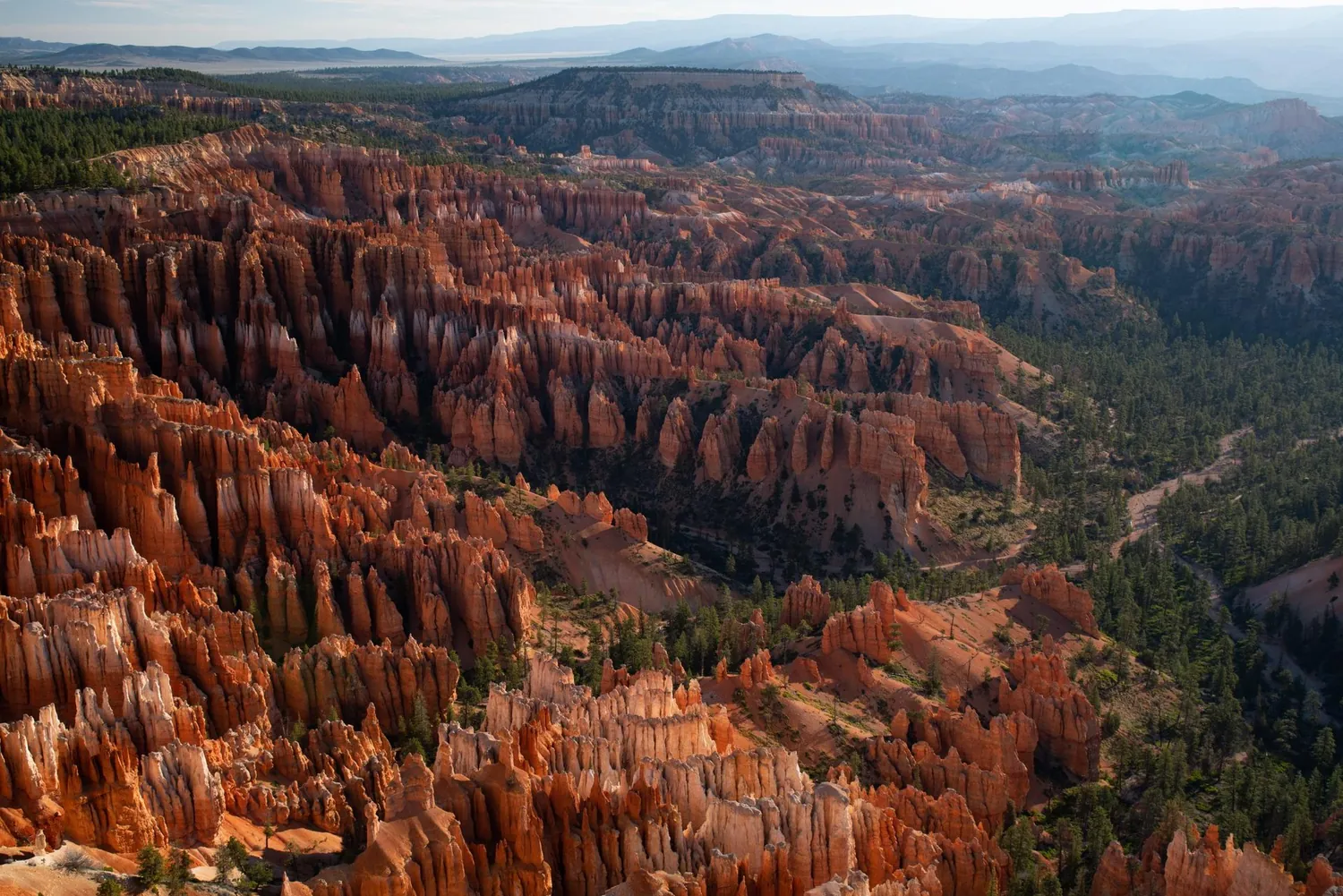
 NPS Photo / Peter Densmore
Bryce Canyon National Park
Tonight at Bryce Canyon National Park
Hoodoos (irregular columns of rock) exist on every continent, but here is the largest concentration found anywhere on Earth. Situated along a high plateau at the top of the Grand Staircase, the park's high elevations include numerous life communities, fantastic dark skies, and geological wonders that defy description.
Weather & conditions
Due of its high elevation climate, weather at Bryce Canyon through autumn, winter, and spring can be highly variable. From October to May temperatures fall below freezing nearly every night. The park typically experiences its coldest and snowiest periods from December through February. Spring storms in March and April can still produce heavy snowfall that may impact travel in the region. Summer highs are typically in the 70s-80s F and afternoon thunderstorms are common in July and August.
What to do after dark
-
Stargazing at Bryce Canyon
Bryce Canyon's high elevation, clean air, and remote location creates some of the darkest skies in the country. In fact, in 2019 Bryce Canyon officially gained International Dark Sky status. During a new Moon on a clear weather night, you can see thousands of stars and the spectacular band of the Milky Way Galaxy shooting across the sky. We take pride in our ability to protect the night skies for
-
See the Night Sky
Bryce Canyon is a sanctuary for natural darkness. Bryce Canyon's skies are so dark, that in 2019 the park was designated as a Gold Tier International Dark Sky Park. Since the park is open 24 hours a day, whether you head off to a viewpoint yourself or join a night sky ranger program, we welcome you to the dark side!
What this latitude gives you
From 37.6° north, anything above declination +52.4° is circumpolar here: it never sets, so it is available on every clear night of the year. Anything below declination -52.4° never clears the horizon at all.
Astronomical darkness lasts through every night of the year here, including midsummer, which makes this a rare site for a June or July imaging trip.
We do not hold a measured Bortle class for this site, so treat the sky as unknown until you have taken a reading of your own.
Where to stay near Bryce Canyon National Park
Hotels, cabins, lodges and holiday rentals within reach of these coordinates, for the nights you have chosen above. We earn a commission if you book through this map, at no extra cost to you. It does not change what you are shown: nothing here is ordered, promoted or paid for. How the site is paid for.
- Address
- Highway 63, Bryce, UT 84764
- Phone
- 4358345322
- Coordinates
- 37.5840, -112.1827
- Official site
- nps.gov