
 NPS/Veronica Verdin
Arches National Park
Tonight at Arches National Park
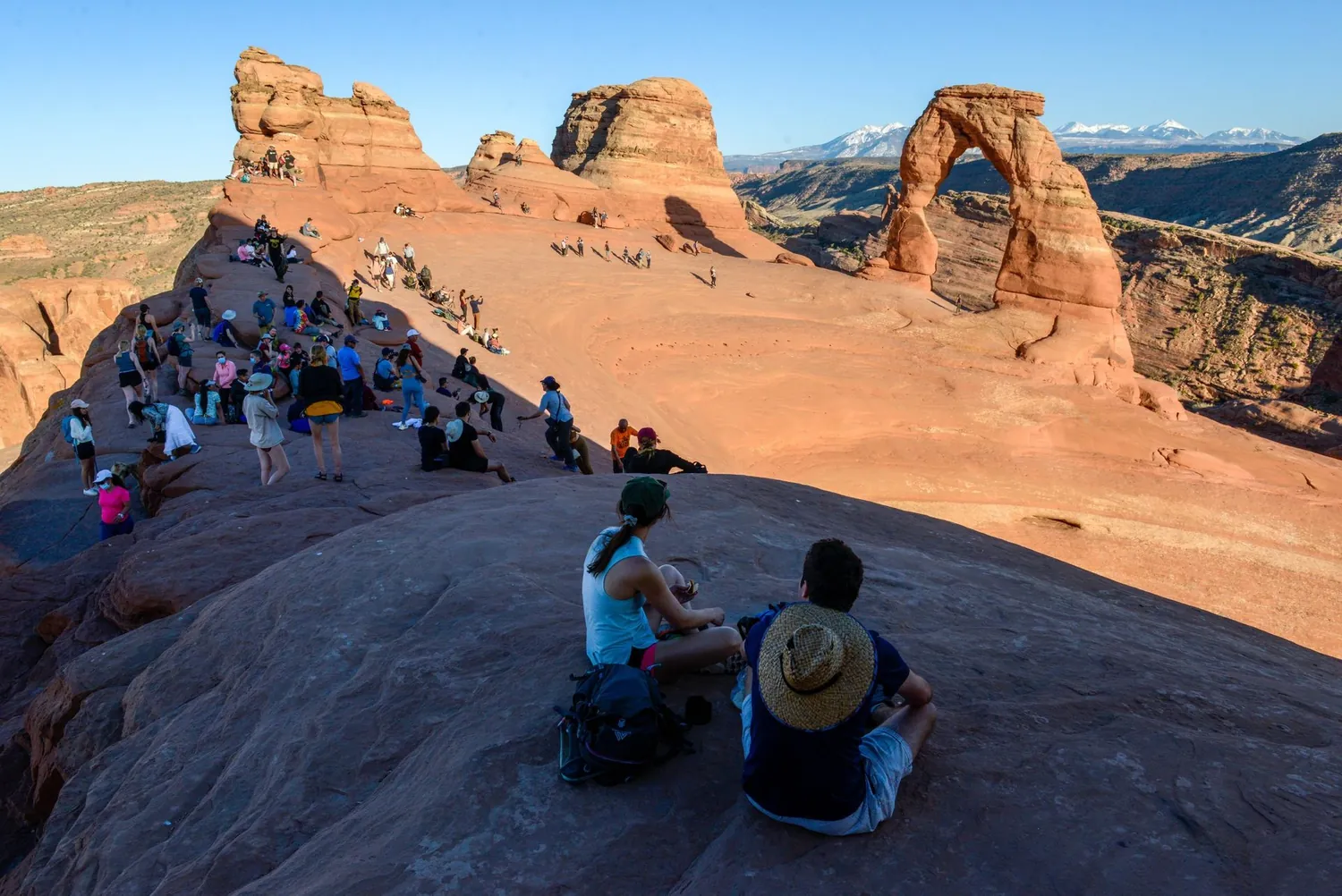
Discover a landscape of contrasting colors, land forms, and textures unlike any other. The park has over 2,000 natural stone arches, hundreds of soaring pinnacles, massive rock fins, and giant balanced rocks. This red-rock wonderland will amaze you with its formations, refresh you with its trails, and inspire you with its sunsets.
Weather & conditions
Arches is part of the Colorado Plateau, a "high desert" region that experiences wide temperature fluctuations, sometimes over 40 degrees in a single day. The temperate (and most popular) seasons are spring (April-May) and fall (mid-September-October), when daytime highs average 60 to 80 F and lows average 30 to 50 F. Summer temperatures often exceed 100 F, making strenuous exercise difficult. Winters are cold, with highs averaging 30 to 50 F, and lows averaging 0 to 20 F.
What to do after dark
-
Stargazing Events in Southeast Utah
Rangers occasionally lead stargazing programs and events at parks throughout southeast Utah. Learn about what to expect and check out a schedule of stargazing events at Arches and Canyonlands national parks and Hovenweep and Natural Bridges national monuments. Even when formal programs are not offered, people are welcome to enjoy the parks after dark on their own.
-
Stargaze at Panorama Point
Arches National Park and the surrounding Colorado Plateau offer some of the darkest night skies remaining in the United States. You can enjoy the park after dark by viewing spectacular night skies.
What this latitude gives you
From 38.7° north, anything above declination +51.3° is circumpolar here: it never sets, so it is available on every clear night of the year. Anything below declination -51.3° never clears the horizon at all.
Astronomical darkness lasts through every night of the year here, including midsummer, which makes this a rare site for a June or July imaging trip.
We do not hold a measured Bortle class for this site, so treat the sky as unknown until you have taken a reading of your own.
Where to stay near Arches National Park
Hotels, cabins, lodges and holiday rentals within reach of these coordinates, for the nights you have chosen above. We earn a commission if you book through this map, at no extra cost to you. It does not change what you are shown: nothing here is ordered, promoted or paid for. How the site is paid for.
- Address
- 5 miles north of Moab, Utah, on US 191, Moab, UT 84532
- Phone
- 4357192299
- Coordinates
- 38.7226, -109.5864
- Official site
- nps.gov