
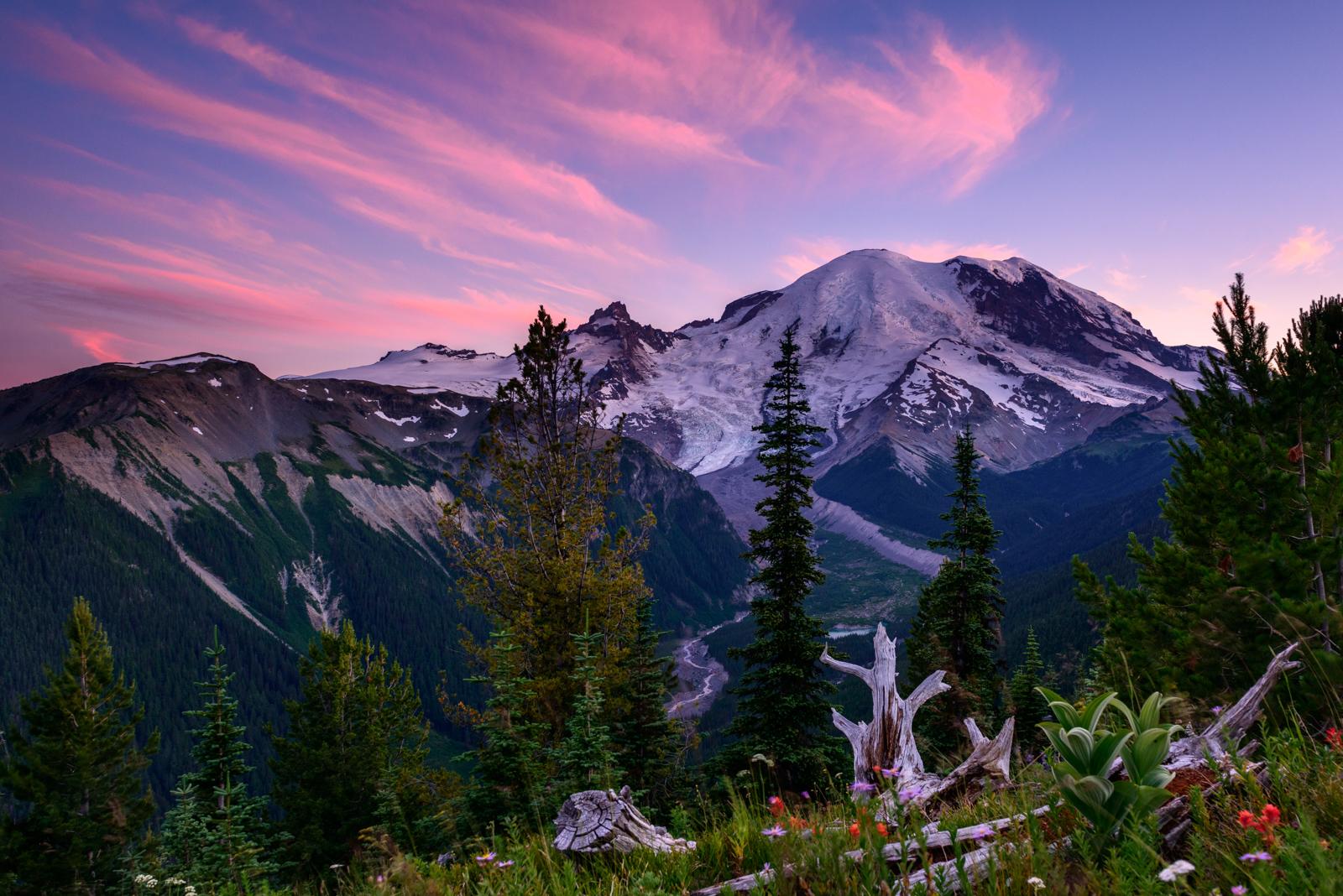
 JD Hascup Photo
 Mount Rainier National Park
Tonight at Mount Rainier National Park
Ascending to 14,410 feet above sea level, Mount Rainier stands as an icon in the Washington landscape. An active volcano, Mount Rainier is the most glaciated peak in the contiguous U.S.A., spawning five major rivers. Subalpine wildflower meadows ring the icy volcano while ancient forest cloaks Mount Rainier’s lower slopes. Wildlife abounds in the park’s ecosystems. A lifetime of discovery awaits.
Weather & conditions
Weather patterns at Mount Rainier are strongly influenced by the Pacific Ocean and elevation. The climate is generally cool and rainy, with summer highs in the 60s and 70s. While July and August are the sunniest months of the year, rain is very likely in spring, fall, and winter. Visitors should be aware that mountain weather is very changeable. In the higher elevations, like Paradise, winter can last from November to May with many feet of snow on the ground.
Where to look upStargazing here
Full Moon Hikes at Mount Rainier
Trail options and safety tips when hiking under a full moon at Longmire, Paradise, and Box Canyon at Mount Rainier National Park.
nps.gov →Paradise & Stevens Canyon
Learn how to safely star gaze in the Paradise and Stevens Canyon Road areas of Mount Rainier National Park.
nps.gov →Star Gazing at Sunrise
Come explore the parks after dark! Star gazing is a great way to end a long day of hiking and exploring the park. The Sunrise area is a perfect spot for star gazing. There are several ways to view the stars at sunrise from staying in the parking lot to hiking on trails. There is something for everyone.
nps.gov →