
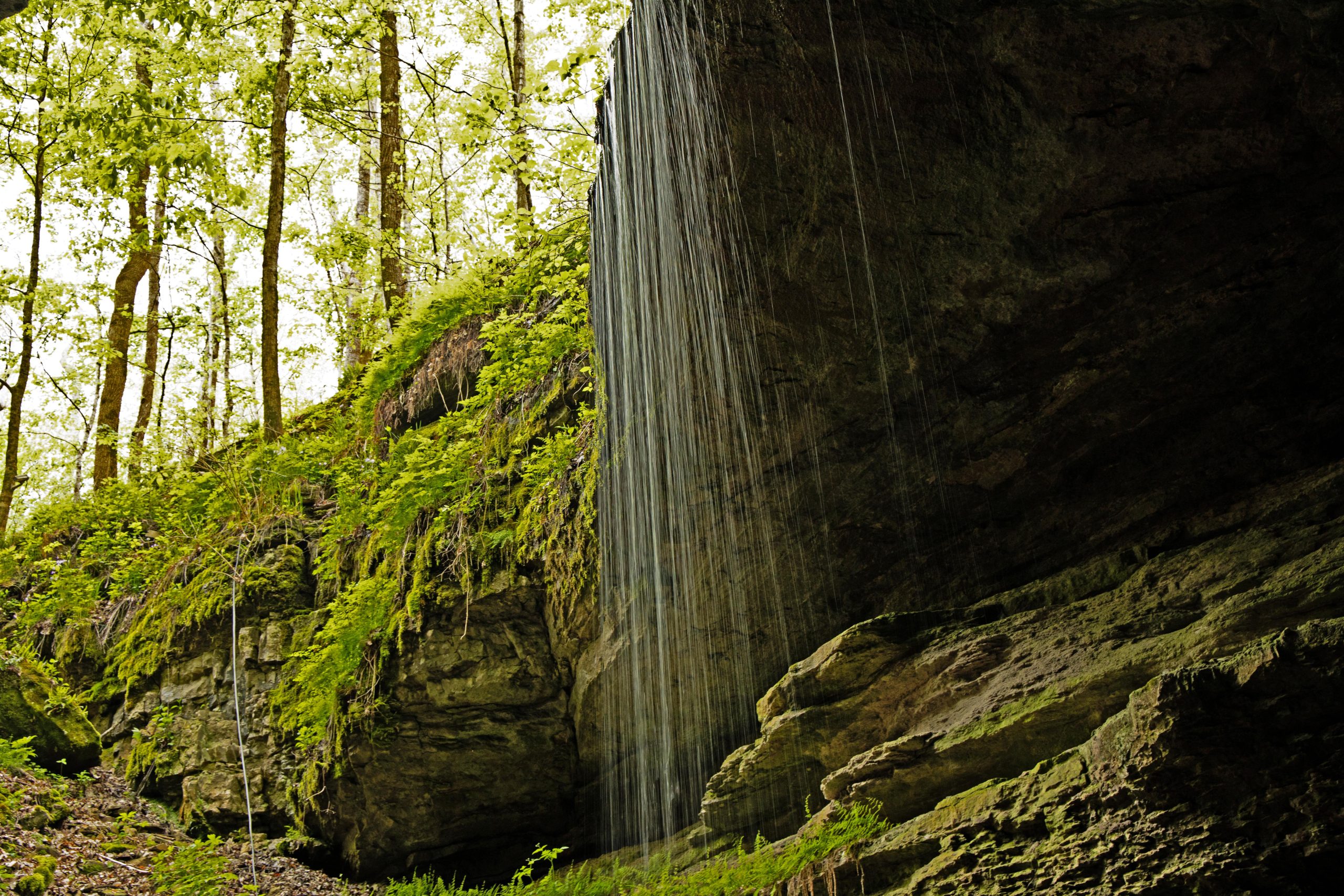
 NPS Photo/ Deb Spillman
 Mammoth Cave National Park
Tonight at Mammoth Cave National Park
Rolling hills, deep river valleys, and the world's longest known cave system. Mammoth Cave National Park is home to thousands of years of human history and a rich diversity of plant and animal life, earning it the title of UNESCO World Heritage Site and International Biosphere Region.
Weather & conditions
Kentucky has a moderate climate with warm, yet moist conditions. Summers average in the high 80s; winters average in the low 40s. Southern Kentucky, where Mammoth Cave is located, receives the highest average precipitation for the state, about 50 inches per year, mostly in spring. Winter can bring mild to moderate snow and ice. Storms happen year-round, and can include tornadoes and flooding in low-lying areas, but severe weather is infrequent. The temperature deep in the cave is a constant 54°F (12°C).
Where to look upStargazing here
See the Stars
Since prehistoric times, humans have looked up at the night sky and pondered the wonders of the universe. People have used the stars and planets to navigate, keep track of time, and to connect with other cultures. Regardless of your reason, Mammoth Cave National Park provides an ideal place for stargazing.
nps.gov →